Artificial intelligence (AI) is reshaping industries and driving innovation. As organisations turn to AI for competitive advantages, relying on third-party vendors introduces new complexities and risks. Effective AI governance is crucial for managing these challenges.
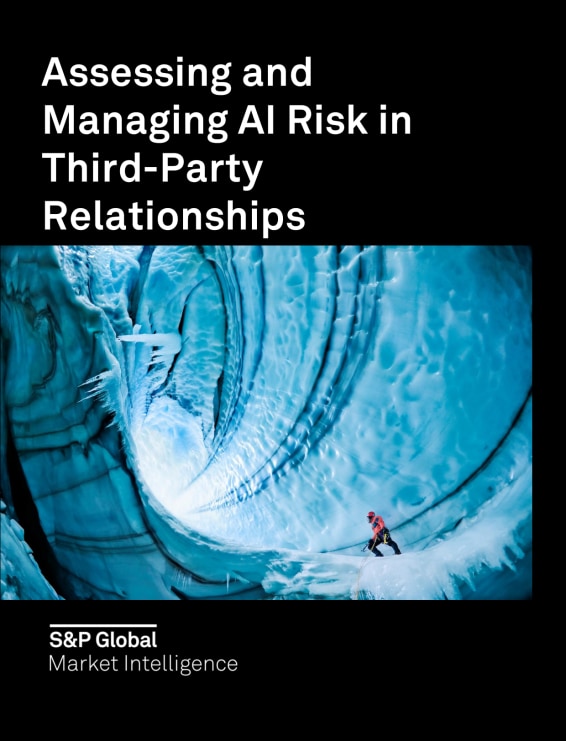
Discover how to navigate the complexities of AI integration in third-party ecosystems with S&P Global Market Intelligence’s in-depth white paper, 'Assessing and Managing AI Risk in Third-Party Relationships'.
In this report, you'll learn how to:
- Understand AI risks: explore key risks associated with AI in third-party relationships, including data privacy, ethical considerations, and regulatory compliance.
- Leverage existing frameworks: see how to apply proven control frameworks to manage and mitigate AI risks effectively.
- Implement best practices for AI governance: learn how to embed AI risk management early in the third-party lifecycle and foster a culture of responsible AI use.
- Tackle generative AI challenges: understand the unique risks of generative AI and how to ensure content authenticity and quality.
- Adopt structured risk management: use a structured approach to assess, prioritise, and stay ahead of evolving AI-related risks and regulations.
This resource is essential for executives, risk managers, procurement professionals, and anyone managing third-party relationships who wants to harness the power of AI responsibly and confidently.
Download the report now.
To download please sign in.