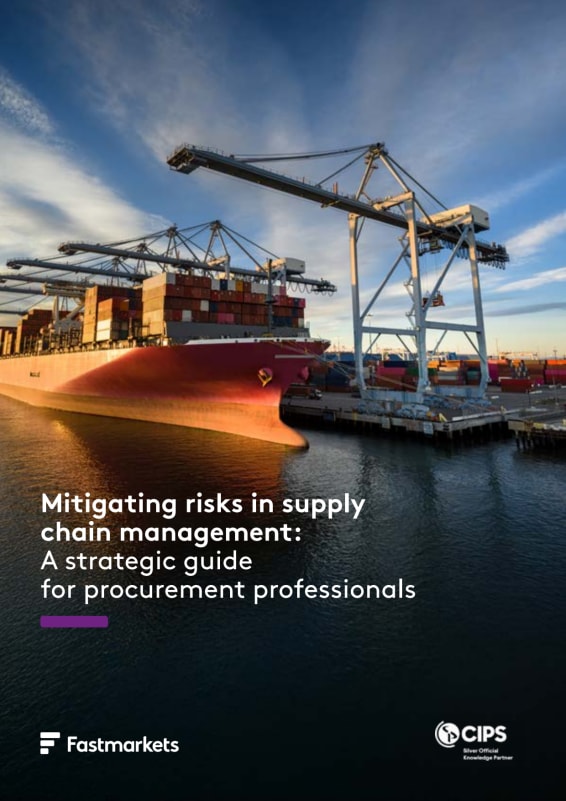
In today’s unpredictable market, global supply chains face an unprecedented landscape of challenges, from tariff volatility and geopolitical instability to inflation and climate change. As an official CIPS Knowledge Partner, Fastmarkets is proud to share our latest strategic guide, designed to help you navigate this complex environment.
We believe this white paper will equip you with the modern risk management techniques needed to protect your operations and adapt swiftly to uncertainty.
Download the white paper to learn:
- Actionable risk mitigation strategies: discover four key strategies, including supplier diversification and dynamic should-cost modelling, to build a more resilient supply chain.
- Expert geopolitical analysis: understand how events like tariff hikes and regional conflicts directly impact commodity markets, with expert insights on base metals, steel and technology metals.
- Data-driven decision making: learn how to integrate real-time data and predictive analytics to identify risk patterns before they disrupt your operations.
- Practical lessons from real-world disruptions: gain valuable insights from the 2025 US-Brazil tariff crisis and the five critical lessons it taught procurement leaders about policy risk, contract flexibility and strategic sourcing.
Download your complimentary guide now.
To download please sign in.